

The author is Nataliia Kryvda, Academic Advisor at Edinburgh Business School and House of Knowledge platform in Ukraine, Doctor of Philosophy, Professor at Taras Shevchenko National University of Kyiv, in 2024 Nataliia was appointed Chair of the Supervisory Board of the Ukrainian Cultural Foundation. The original article was published on NV.ua in 2020.
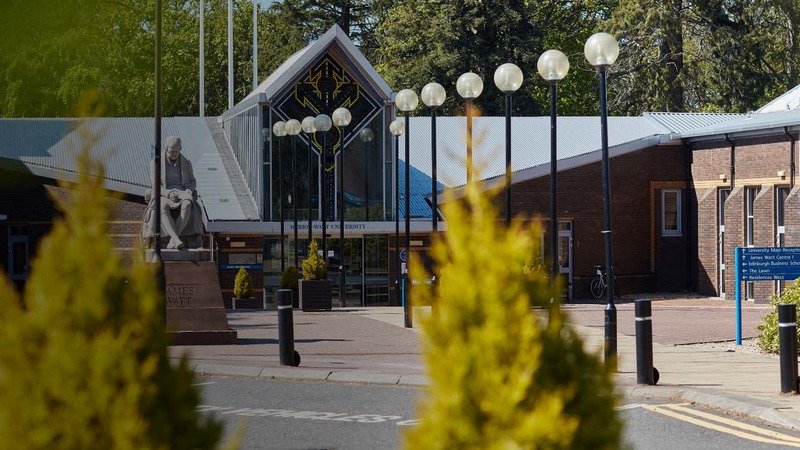
In 2010, a group of international and Ukrainian investors spotted a strong need for high-quality systemic business knowledge amidst Ukrainian top managers and business owners. The essence of business development is that any crisis is inevitably followed by a recovery, and thus the demand for knowledgeable and systems-thinking managers is on the rise. The response to this demand was a shared decision to partner with Heriot-Watt University’s Edinburgh Business School in Ukraine and establish an educational cluster for top executives who strive to master global business knowledge and best practices in order to be able to communicate with the global business community in the same language.
Today, when Ukrainian business is facing a drastic need for strong leadership professionalism, transparency and partnership strategies, high-quality international business education enables executives to grow their businesses in keeping with global trends, find well-balanced solutions in a crisis, and maintain and promote their teams and companies.
In simple terms, the independent Ukrainian business has 33 years of development and establishment to its credit, while the British business has about 500 years. If you have not read Don Quixote or King Lear, but have limited yourself to deep and interesting, but exclusively Ukrainian literature, it will be difficult to form a relevant picture of the wider world. That principle is in tune with modern business. It is the highly concentrated expertise of international education that offers a wide array of business toolkits that enable you to become effective, successful and, eventually, happy.
We maintain contact with most of our MBA alumni and have been witnessing for over a decade the ways in which the knowledge enabled Ukrainian managers and entrepreneurs to revitalise their companies and businesses and audit their performance from a new perspective. Since spring 2020, our students and graduates, like all the leaders, have faced very difficult conditions. We were pleased to find out that the system of knowledge made it possible for many to work out clear, ethical and effective strategies for large Ukrainian enterprises and international organisations, as well as for joint projects.
 Alumni Club in Ukraine
Why British higher education proves to be not only effective but even ‘comfortable’
The first pillar of British education is that the student is in the driver’s seat. For the British, the purposefulness of the need to acquire knowledge and the choice of a programme are of great importance. Let it be the need for personal development or the demand for career advancement, or an intrinsic urge to synthesise one’s own experience – motivation is the backbone.
The second pillar of the UK education system is the concept of flexibility. The student can decide on the pace of the programme. In Ukraine, in particular, we provide study materials in English. In this way, managers learn to use the one language with the global business world.
According to Olexandr Grybenko, a graduate of Edinburgh Business School and Chief Development Officer at Larch Networks, an MBA is neither a cure-all nor a goldfish. Any achievements after graduating with a Master of Business Administration degree come as a result of two factors, namely, the knowledge and skills you acquire. ‘Studying to get an MBA is more like a massive paradigm shift, where your entire outlook toward work and life shifts. At a certain time you hit a stage in life where you want to consolidate, to lay a foundation for your experience and skills. If you are at such a point in your life, you shall succeed.’
Unlike a traditional university, MBA students are able to shape their own personal study path or personal track. It implies an individually tailored study track adjusted to the student’s current needs. Each student can choose from which MBA course to begin, whether to take a break, and with what course to proceed.
The cornerstone of Edinburgh Business School is the balance between personal life, pace of learning, personal potential and business needs.
Another pillar is a holistic view and integrity of business understanding. The programme of the UK business school foresees that high-level managers not only gain new knowledge ( a very valuable thing), they also organise their prior experience.
Picture what Mendeleev’s Periodic Table of Elements looks like. No one (presumably) can recall all the elements of the table based solely on their own experience. Some of the elements are familiar, others are not. Business education helps not only to fill in all the boxes (to gain knowledge!), but also to understand the underlying logic of such a system. By understanding the underlying logic of whatever process, you can re-create it, analyse its flow, and figure out what goes badly wrong and should be changed. Comprehension of the business process essence enables you to ‘break down’ the objectives, targets and means of achieving them, to better understand the situation in your team, business, industry, country and wider economic system.
For this reason, our MBA programme brings together experts with different management roles and from various backgrounds: the agricultural sector, heavy and light industry, pharmaceuticals, FMCG, banking, public administration, etc. Currently, our MBA alumni club hosts CEOs and founders of well-known IT companies. Despite the common mood of criticism in the industry, reality has taught us that: CEOs of IT companies require comprehensive management knowledge on an equal footing with other sectors. As a result, we have turned into a sort of platform for students to share their knowledge and experience not just of various businesses, but also of locations (students from different cities of Ukraine come to our Kyiv campus, some of them live in other countries and continue to study with us online). All of this allows students to quickly gain diverse experience, networks and innovative insights for their own organisation.
Why UK scholarship is not boring
The British appreciate transparency, equity and high academic standards. Sadly, in Ukraine, the term ‘academic’ has a rather negative connotation, being associated with a rigid and non-developing learning format. But academic norms and approaches of the European educational community are based on verified information, large databases, scientific researches, validation and systematisation of emerging and already established business toolkits.
The approach assumes that the executive is able to think out of the box, and his or her thinking does not look like a ‘patchwork quilt’. It is exactly the academic approach that shapes the understanding of the intrinsic, holistic logic of every business venture. If a businessman does not possess all the fragments of information, he or she is still capable of constructing the sequence of a successful process as he or she learnt to comprehend internal business development scenarios with the help of microeconomics, macroeconomics, strategic marketing and human capital management concepts. Academia implies the skill of thinking systematically, seeking well-balanced solutions in times of crises and any other ambiguous scenarios.
Let me share a real case with you. Our graduate, after completing an MBA programme, received an offer to head an international IT company in Ukraine. When I asked him once what kinds of knowledge were most demanded, I was somewhat surprised by his answer. He did not mention accounting, finance or marketing. It turned out that he needed to know about organisational behaviour and HR. His company was in need of organising and arranging the company’s main asset – employees. And he dedicated the majority of his time to rebuilding human capital, fostering and developing it.
Business as a key actor of transformation in society and our country
Over 250 students residing in Ukraine and abroad have already successfully completed the MBA programme and been awarded a degree and diploma of Heriot-Watt University, one of the oldest higher education institutions in the UK. Nearly 800 other senior managers are currently active students at a business school, since their studies can last from 2-3 years to 7 years. Across the world, this figure is much higher – Edinburgh Business School’s international MBA programme has been a leader in number of students worldwide for well over 8 years. In the last ten years alone, the programme has been successfully completed by more than 49,000 graduates.
Every student and alumnus is driven by a conscious commitment to invest into his or her self-development, a strong motivation and a sense of responsibility for not only his or her private life and career, but also for the business he or she devotes his or her time to. Business school, in turn, helps students to make ethical decisions leading to sustainable development – both for the company and the country. One of our alumni noted that in the face of globalisation, it becomes increasingly important to communicate in the one language of the world business community and to align our actions to shared values and principles.
I firmly believe that the introduction of British education standards in Ukraine keeps shaping a fundamentally new perception of business domestically. The business has always been one of the key agents of change in society – it demands it, funds it, and enacts it. Probably, the message that we are headed to Europe today should now sound different: let’s build Europe right here in Ukraine.
 Business School alumni and students community
Reflect on the lessons of the crisis to win
The Edinburgh Business School (EBS) in Ukraine was started during the crisis of 2009 as a hub for the Eastern Europe, and has coped with the 2014-2015 crisis by changing its format and gaining resilience, and is equipped to face the challenges of the following years.
One of the lessons our team learned at the time was that you shouldn’t “put all eggs in one basket”. As EBS considered its future global presence, the team in Ukraine decided that it was time to develop additional business projects. This led to the creation of the House of Knowledge educational platform, whose mission was to provide Ukrainian businesses with access to high-quality international education in various fields. Thanks to the platform, we launched the first programme for top management and senior project and programme managers – Programme and Project Management (a European certification supported by IPMA), and then launched the Diploma in Procurement & Supply programme for procurement professionals from the UK’s Chartered Institute of Procurement and Supply (CIPS), a world-leading provider of professional qualifications in procurement, supply and logistics. And we keep developing the EBS Master of Business Administration programme.
 Alumni from Ukraine at the MBA Graduation Ceremony in Edinburgh
Nowadays, reality serves to set the right focus and identify key priorities. For instance, we began to deliver courses online and systematically develop online networking, and we have students who work and live in Europe and America. And we clearly recognise that our value is not only in knowledge, but also in people – graduates, active students and the local team. We can also rely on our UK partners who see their global mission as shaping future leaders for the world of tomorrow.
In volatile times, business education has proved to be the ultimate playground for connecting forward-thinking and courageous minds who are willing to explore new ideas and are not intimidated by challenges. They know that the crisis will be followed by an upswing, and it would be better to welcome it equipped.
