The Leadership: Theory and Practice course explores the substance of leadership and its distinctiveness from management, and introduces strategies for building leadership skills at a variety of scales. The course examines the concept of leadership, distinguishing it from management, and explores ways to enhance leadership potential at the individual and team levels and apply it to the growth of organisations at the operational, strategic and visionary levels.
Leadership is the most vital ingredient for the long-term success of organisations and companies, which is essential for all other business assets to be fully effective. This is one of the most widely studied phenomena in the world and one of the most poorly understood in society.
The course is aimed at exploring, understanding and applying leadership, addressing not only the theoretical foundations but also its applied aspects in diverse social and cultural contexts, targeting all sorts of audiences. The course has a twofold objective: to facilitate the understanding and development of personal leadership and to shape and foster the generic leadership function within organisations.
The course explores what constitutes leadership and how it is distinct from management; how leadership can be utilised for the operational and strategic development of organisations. Whilst management is about reaching a specific goal, leadership is more concerned with influencing and engaging people. In some instances, it can look directional, while in others it is more about allowing individuals to keep doing the work they are doing. Leadership is related to motivating people, so we will look at different kinds of approaches to motivation and various ways of understanding motivation.
Leadership is essential to any organisation – it is what makes the difference between a successful and a poor organisation. The Leadership course explores exactly what we actually mean when we speak about genuine leadership behaviour and ways to cultivate it in multiple settings.
People strive to be valuable, productive, efficient and creative, to contribute, and to accomplish their own and organisational goals. Leadership is not about simply directing people to do things; good leadership is about empowering people to be successful and contribute to the common purpose as best they can. Leadership presupposes the acknowledgment that individuals come to work in organisations not just to receive a paycheck, but to work towards meaningful goals together, and the leader must facilitate the process.
The course addresses the issues of leadership and cultural context, the challenges of gender balance and ethical business behaviour. No less important is the hands-on element – on how to craft your own leadership development programme and how to shape and nurture the leadership function of the entire organisation.
On completion of the course, you will:
| Delivery Mode | Classes Schedule | Course Duration |
|---|---|---|
| Online classes, pre-class preparation |
Saturday or Sunday, twice a month |
2,5 – 3 months |
Interested in more information?
Download the detailed course syllabus
Management experience – 3+ years (senior or middle managers / entrepreneurs / business owners).
Higher education diploma, and professional certificates (if any).
English language proficiency at IELTS 6.5 (reading). The level of language proficiency is verified during an interview and a motivational essay.
Submit your CV or LinkedIn link.
Hold an individual interview online or in person with a campus representative.
Submit your essay in English. Outline the key reasons why you want to get an MBA, highlight your career goals and expectations from the programme, etc.
The fee includes admission to Edinburgh Business School, support during the course, course materials, live tuition classes remotely or in Kyiv (as applicable), assessment attempt.
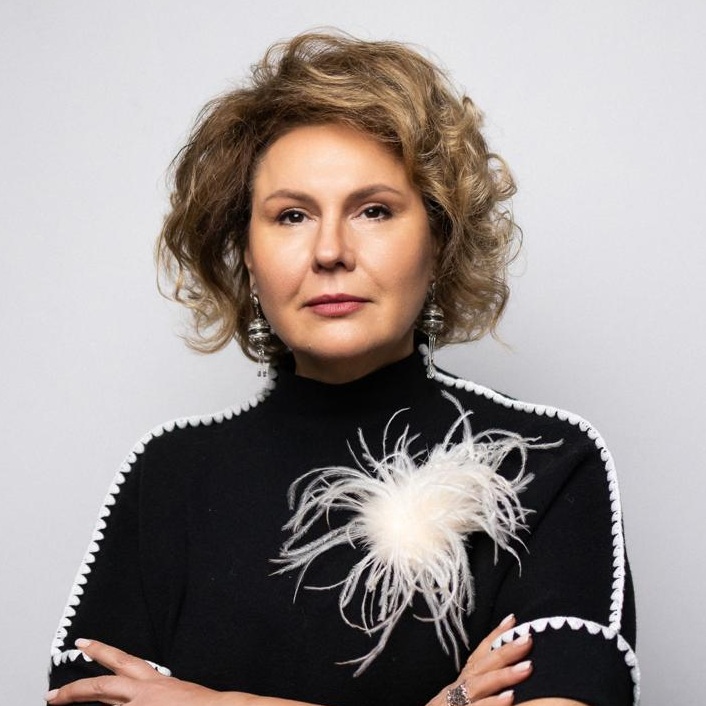
Academic Director and Advisor of the House of Knowledge international programmes and certifications platform and Edinburgh Business School in Ukraine.
Doctor of Philosophy, Professor of the Department of Ukrainian Philosophy and Culture at the Taras Shevchenko National University of Kyiv.
